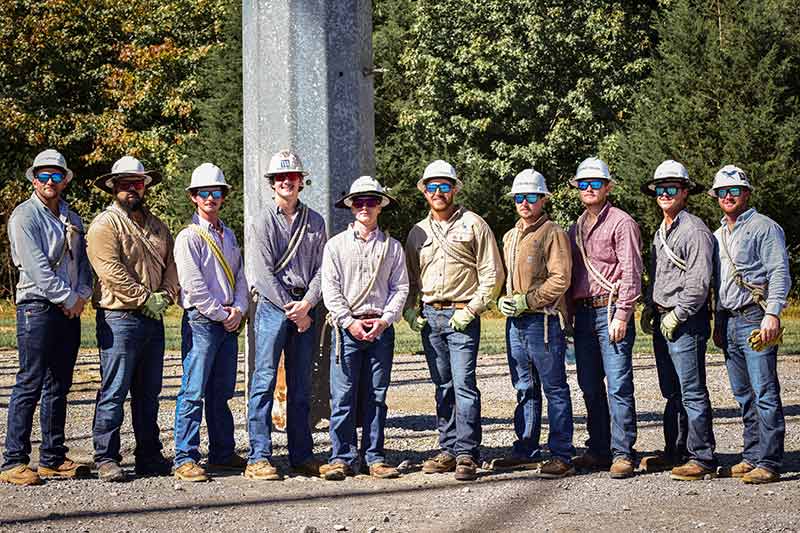
It’s graduation day.
A series of 80-foot power poles cast long, thin shadows across the training field at the Bellefonte site in Alabama.
Ten lineworker apprentices stand shoulder to shoulder, gazing skyward at the structures that, to them, have become just another day at the office.
Each apprentice lugs a climbing belt, hardhat and other protective gear.
And each has a single rope draped like a sash across their chest. They were given this rope at the start of this 10-week climbing school – the beginning stage of their four-year process to become a journeyman lineworker.
Caught without the rope, they’d have to drop what they’re doing and climb to the top of a power pole – a discipline designed to teach preparation, awareness and camaraderie, instructors said.
“This is one of the strongest groups we’ve had,” said Joe Bell, TVA Field Transmission Line supervisor. “The current class has such a varied background. We have people who were in sales, in education and some just out of high school.”
One thing they all have in common? Grit.
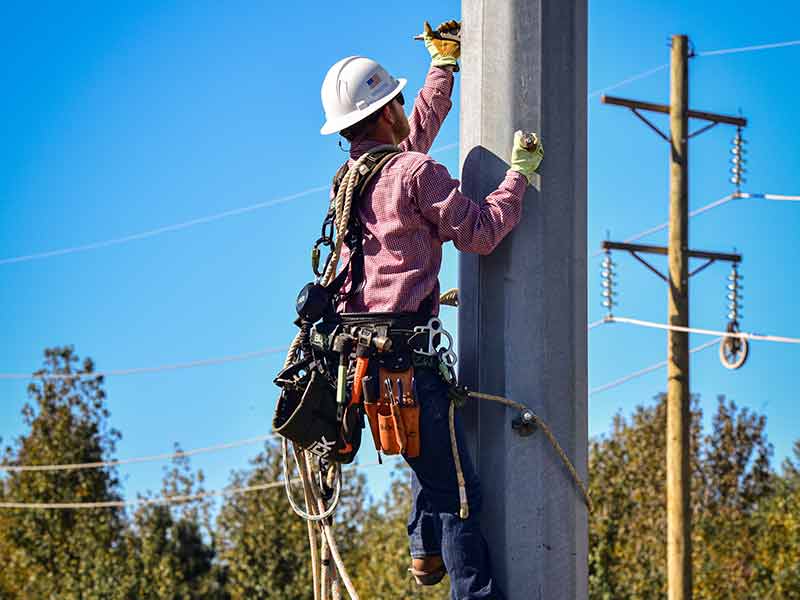
Each candidate undergoes a series of mental and physical evaluations before being selected for the program, which is not for the faint of heart. In fact, the 10 apprentices who made it to this graduation day represented just 1% of the applicant pool.
Since Day 1, it’s been an honor they never took lightly.
“On the tough days, I had to remind myself to trust my abilities,” apprentice Bosh Johnson said. “Climbing the tower lace in the heat tests your mental fortitude and physical strength. They wouldn’t have picked me if they didn’t think I could do it.”
Johnson came to the profession unconventionally.
The oldest of the group, he’d been working on his degree in education when he realized life inside a classroom wasn’t for him.
“My roommate at the time was a helicopter lineman,” Johnson said. “And his answer to, ‘How was your day?’ was so much more exciting than mine.”
A bit of an adrenaline seeker, Johnson felt inspired to explore a career that would take him to new heights.
“I decided to give this a try,” he said. “Being that high in the air wasn’t scary to me.”
Driven by a deep sense of purpose, he applied for the program – and made the cut.
The four-year structured curriculum, jointly developed by the IBEW and NECA, includes hands-on fieldwork and bookwork.
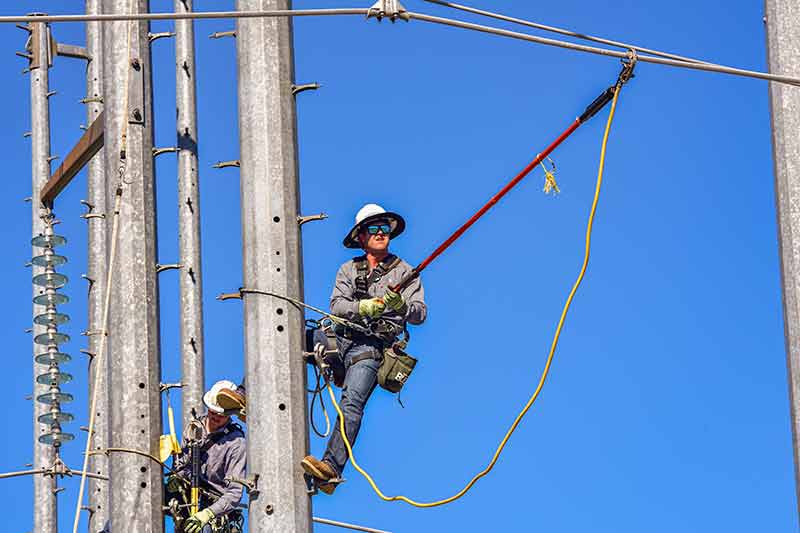
The mindset requires equal parts bravery and sacrifice.
As the new recruits scaled the poles on graduation day, Bell watched them, reflecting on his own time as a lineworker. Time away from family is the toughest part.
“This work doesn’t take (off) holidays or weekends,” Bell said. “Doesn’t matter what day of the week it is, it never stops. I make sure to never lose sight of who I am at home – a husband, a father. I tell these guys, ‘When you’re home, be home.’”
By the 10th week, this group of apprentices had forged an adamantine bond, supporting each other through challenges and laughing through the learning.
Bell could relate. He pointed to a supervisor across the field, explaining how they began their lineworker journey together and went on to build a camaraderie rooted on shared triumphs and difficulties.
Though rain, ice and sweltering heat, they stood shoulder to shoulder.
“We remember a time when we didn’t even have bucket trucks – only climbing,” Bell said, smiling.
He hopes memories of this program will stay close to the chest of these new recruits – just like that rope they carry.
Hunter Staggs, one of the apprentices who entered the trades right out of high school, has found unexpected joy in this work. Drawn to the outdoors and physical nature of the job, he’s eager to grow his skillset and serve the region.
“It almost feels wrong to have this much fun at a job,” Staggs said. “I didn’t know I could be this fulfilled and enjoy what I do.”
Like Bell and the lineworkers who came before them, each generation of this profession relies on mentorship to achieve excellence. Industry knowledge is passed down to each new group, instilling a passion for safety and sacrifice.
And a passion for service to the people of the Valley region.
“As a lineworker,” Staggs said, “it’s not about me. It’s about us.”